


Preparing students for the future means equipping them with essential skills to navigate a rapidly evolving digital world. Leading this initiative are two dedicated Ed Tech Coaches: Mr. McQuiggan (Kindergarten–Grade 5), and Ms. Bayles (Grades 6–12). Together, they ensure that both teachers and students are ready to leverage technology to enhance learning, build tech literacy, and become innovative thinkers.
Though Mr. McQuiggan and Ms. Bayles work with different age groups, their collaboration is crucial. Each coach brings a unique set of skills to the table, but they work together to create a cohesive learning experience for all students. Their goal is clear: by the time students reach Grade 9, they should be well-versed in a range of digital skills. This is achieved through a carefully developed scope and sequence, which ensures that skills are built upon year after year, allowing for a seamless progression.
At UA, it is important to distinguish between Educational Technology (Ed Tech) and Applied Design, Skills, and Technologies (ADST). While ADST predominantly focuses on the design cycle—where students work through projects involving design, creation, and reflection—Ed Tech encompasses a broader spectrum of skills. Ed Tech Coaches ensure that teachers and students are not only proficient in technology but also using it in ways that enhance learning.
In the early years, the focus is on building foundational skills. Mr. McQuiggan, for example, recently worked with Grade 1 students using Ozobots and Beebots—tools that teach early coding, problem-solving skills and computational thinking. Grade 2 students use Book Creator, an app that introduces them to digital publishing. It teaches them how to layout content, choose colours, and design pages—a first step towards more advanced presentation skills they’ll develop later. In Kindergarten through Grade 3, students explore tech through iPad apps like Kodable, Scratch & Scratch Jr., and Seesaw, growing their digital confidence in a way that feels like play but is laying the groundwork for more complex learning to come.
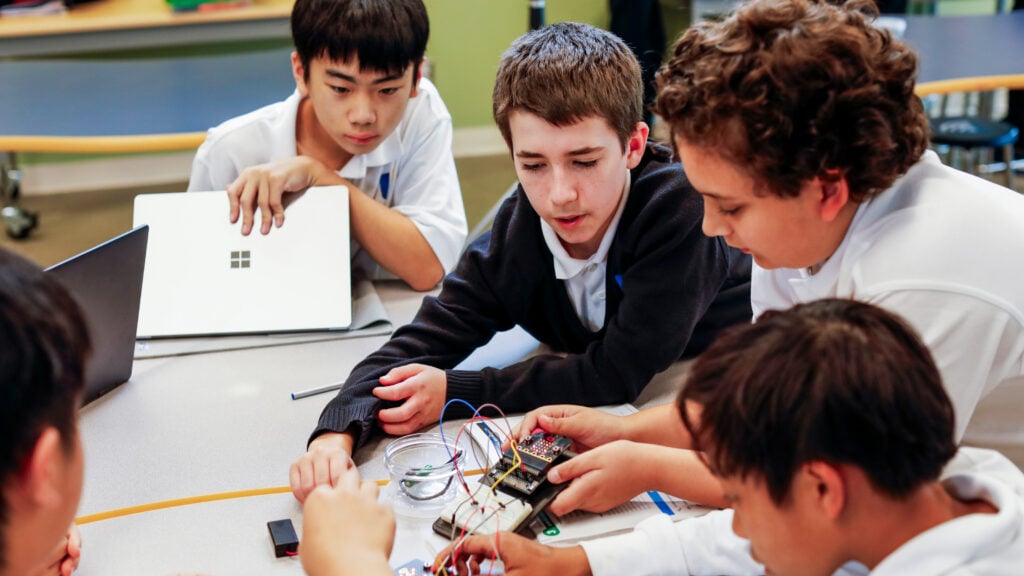
Grade 4 and 5 students continue to grow their tech skills. Robotics is part of their exploration rotation, in which they begin coding with Edisons, programmable robots. They then move on to SPIKE robotics, which incorporates the LEGO platform. Additionally, students learn to use Google Workspace, mastering Google Classroom and Google Drive to manage their work and collaborate with peers. By Grades 6 and 7, students further integrate technology into their explorations, and through courses like Photography 7, they continue to develop tech skills alongside ADST-based design projects. Joining a Robotics Team also becomes an option, providing competition opportunities for students interested in pursuing deeper knowledge in robotics and engineering.
In Grades 8 and 9, students dive deeper into more specialized areas of technology. Here, Ed Tech and ADST come together, as students take on challenges like 3D printing, coding, and robotics engineering. These hands-on projects push them to apply their tech skills in creative and practical ways. In addition to the design challenges, students become more familiar with executive functioning tools in advisory classes, where they learn how to manage their Google Calendar and Drive, helping them organize their workloads and prioritize tasks.
For students in Grades 9-12, the focus shifts to more advanced technologies, such as Glowforge laser cutting and the Cricut die cutter. Elective courses in Technology Explorations, Robotics & Engineering, and AP Computer Science Principles offer them a chance to take ownership of their learning, bringing their creativity and problem-solving abilities to the next level.
UA is intentional about empowering students with the skills and confidence to excel in the digital age. It begins with the thoughtful work of Ed Tech Coaches and staff who ensure that students leave UA not just prepared—but ready to innovate. With this strong foundation, students are equipped to thrive in a world where technology and creativity go hand in hand.


